
Upon entering any building, our senses burst into action, helping our brains paint a mental picture of the environment we find ourselves in. Beyond simple aesthetics, each interior we experience, imbues a feeling or atmosphere, making us feel one way or another.
Creating a home that just feels right; welcoming, warm and familiar, whispering the unique story of the people who live there, is a shared desire for many who are undertaking a home renovation and cohesive design is the key to meeting this goal.
Establishing cohesion between spaces in a home, takes a beautiful design and applies elements of it to all rooms, ensuring that each space follows on from the one previous, like the chapters of a good book.
What do we mean by cohesive?
If a space is cohesive, all the visual elements work together to create a kind of contented harmony. Much like all the different instruments in an orchestra working together to perform a symphony, all the different visual properties such as colour, material and texture complement each other and work together as a whole, bringing the scheme into visual clarity. Everything is in balance, no one element shouts louder than the others, each one is playing an important and valuable part to create the whole.
I might be taking this analogy a bit too far, but as an interior architect and designer, we are both the composer and the conductor. The composition is our design direction or intention for the space; how we ultimately want it to look and feel, but it is down to the conductor to skilfully apply all these different elements and ideas to bring it all together beautifully.
How do you know if your home lacks cohesion?
Identifying a home that lacks cohesion is simple. It just feels off, like something somewhere is missing or incomplete. It’s a sense of unease or a feeling that it’s unfinished somehow.
“Something here is out of balance but I just don’t know what it is.”
So how do you create a cohesive interior?
Our take is that a cohesive home should feel comfortable, lived in and not too serious. Durability and comfort must come first and we prefer an aesthetic that is authentic, relaxed and timeless.
Rather than reaching for completely coordinated, matching finishes and rolling them out throughout each room in a home, our relaxed approach results in a far more subtle cohesion that feels effortless.
Whilst there are many elements in an interior that are designed to all work together, colour and texture are two of the easiest to work with when creating cohesion.
Here is how we do it.
1. Define your design direction
Start with your favourite reference images for each space or room. Gather them all together on one page if you can and spend some time really analysing each one. Ask yourself what draws you to this image and what you really like about it. Is it the colour or materials palette, the furniture style or the architectural elements that resonate most?
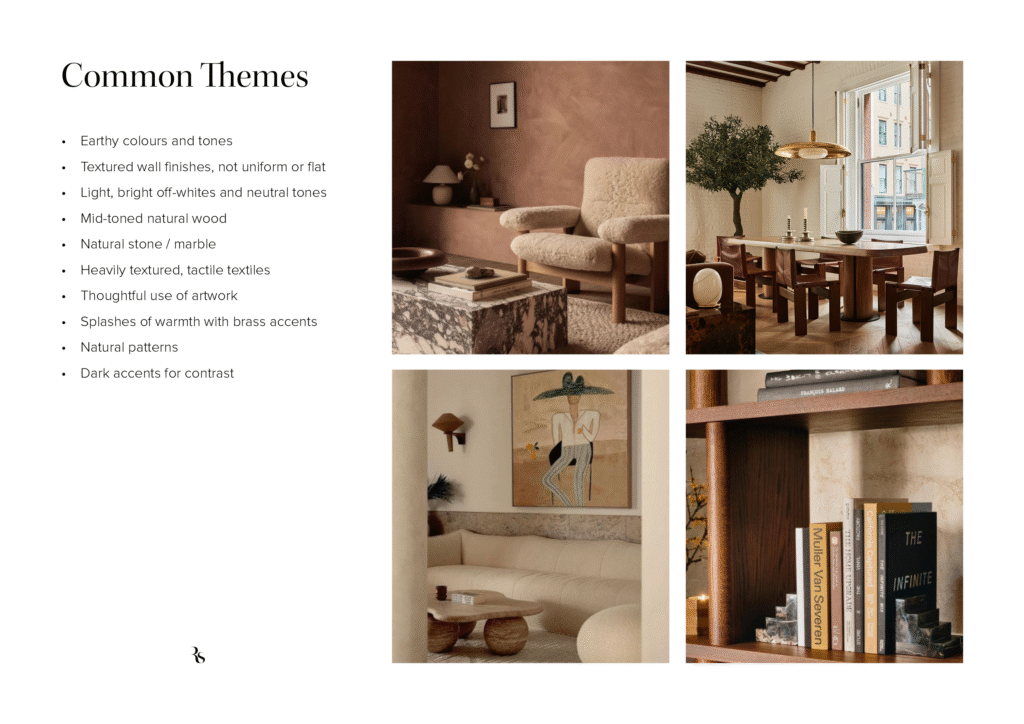
2. Look for common themes
Shortlist 3-4 images that all share commonalities that you love. Take a moment to define the common themes or elements between them all, do they share any common colours, textures or finishes? Lean into these commonalities and condense them down to 4-5 colours and tones. These will become the foundation for your cohesive design.
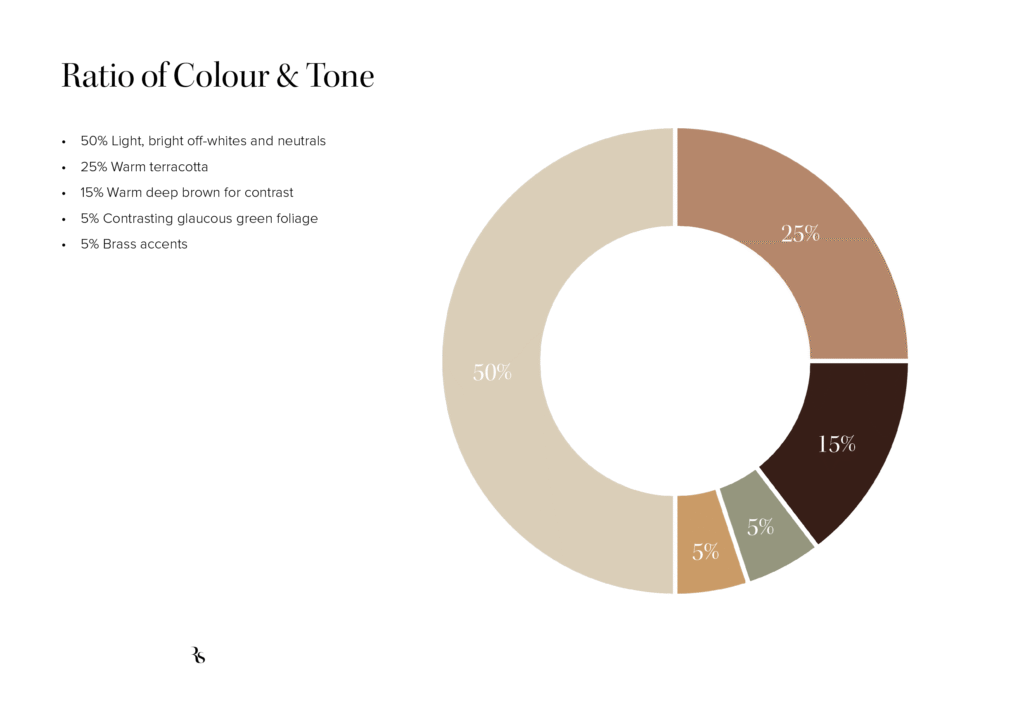
3. Apply a ratio to each element
Starting with the lightest first, give each one a percentage to define the ratio that this particular colour or element will be used throughout the space. This will always vary between homes and the design style we are looking to achieve but we find generally a 50%, 25%,15%, 5%, 5% split works well, giving the most weight to the colour or finish that really drives the final look.
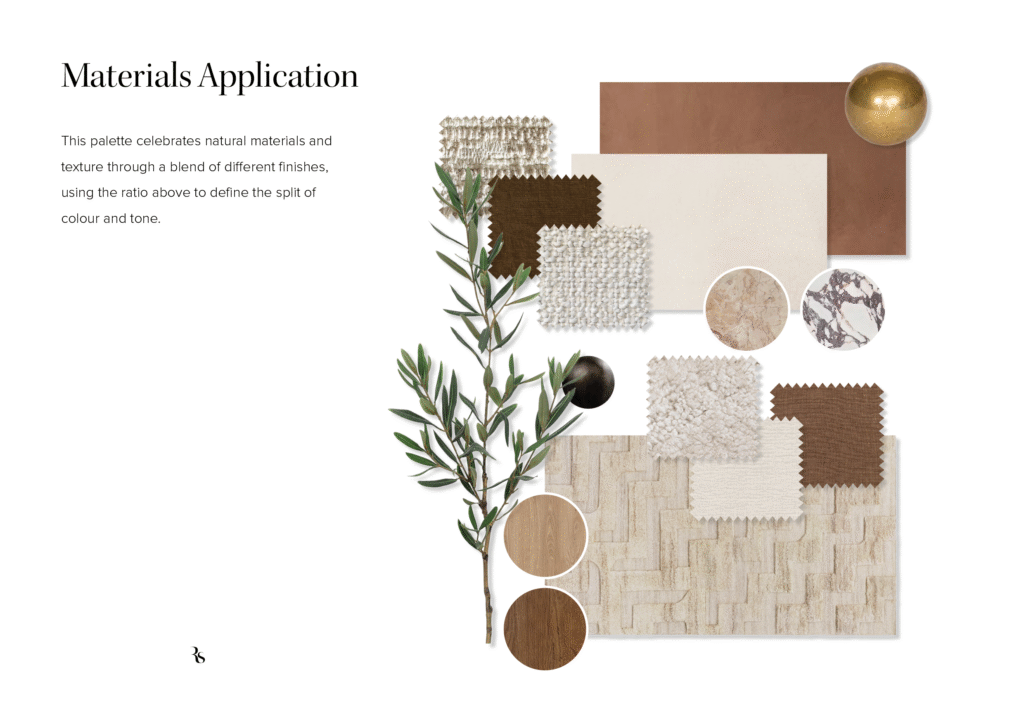
4. Develop a materials & finishes palette
Using the ratio you applied to each colour or tone, apply each colour, in that amount, across all finishes, colours, materials, furniture, artwork and styling items across a space or room.
5. Finesse & Refine
If you prefer a more pulled-together look, don’t deviate at all from this palette. If you like a dash of something unexpected, add in no more than three unique elements (we recommend using styling items such as cushions, objects or artwork) that contrast the rest of the scheme.
Final Thoughts
Of course, there are a lot more levers we can pull as designers to really dig deep into cohesion. We have primarily focused on colour and texture here, however with experience, other subtle elements such as shape, form and rhythm can be exploited to develop a cohesive design language even further.
In a truly bespoke home, cohesion is the quiet hallmark of considered, high-quality interior design.
Curious to discover more?
Thank you for reading Well Designed by Reformation Studio. Subscribe now to receive helpful posts like these directly to your inbox.